Queensland summers don’t ease in gently. One week it’s warm, the next it’s a run of humid nights, heatwave days, and the kind of storm activity that can knock out power and throw debris around the yard. In that mix, your split system air conditioner does more than keep you comfortable. It helps you sleep, protects vulnerable family members in extreme heat, and can reduce indoor humidity that encourages mould.
The problem is that air conditioners rarely fail when it’s mild. They tend to struggle right when you need them most — during peak summer demand, or just after wild weather when your home is already dealing with cleanup. That’s why regular, homeowner-friendly maintenance matters, and why Storm Smart encourages “pre-season” Storm Smart Checks as part of being storm-ready, not just summer-ready.
Why maintaining your air conditioner matters (especially before storms)
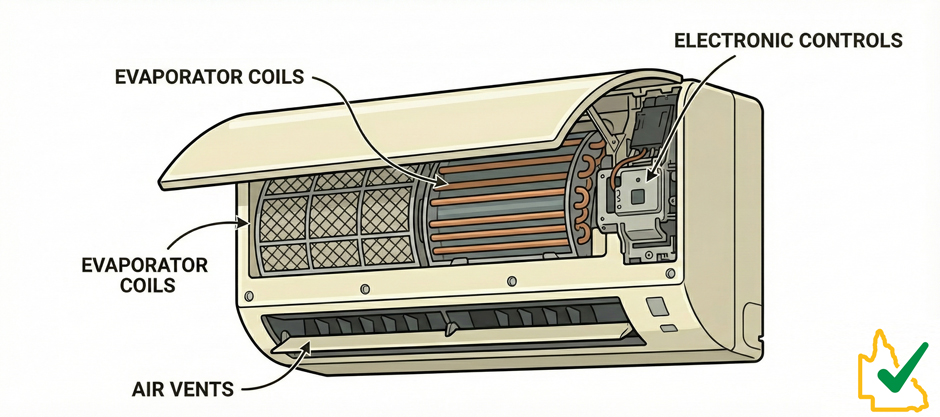
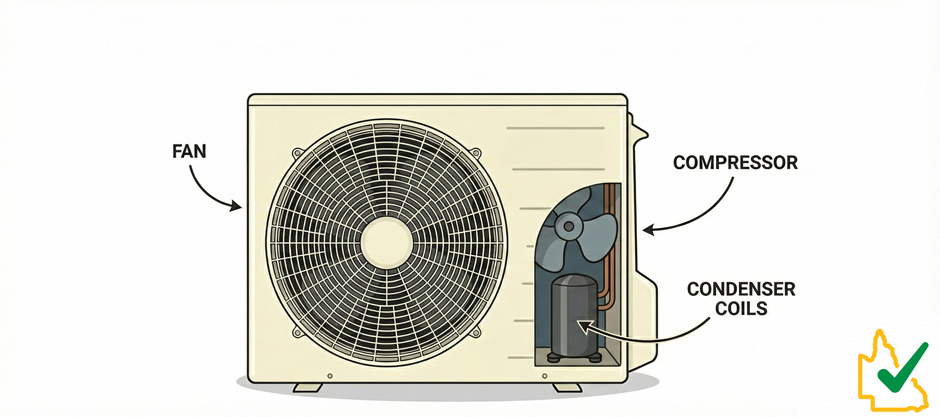
A split system is basically two working halves: an indoor unit that pulls heat and moisture out of the air, and an outdoor unit that dumps that heat outside. When either side is dirty, blocked, or loose, the whole system works harder than it should.
That extra strain shows up in a few predictable ways. You’ll often notice it as rooms taking longer to cool, the unit blowing “not quite cold” air, or your power bills creeping up for the same settings. Over time, poor airflow and damp buildup can also lead to musty smells and reduced indoor air quality, which is a big deal in a humid Queensland summer.
Storms add another layer. High winds can push leaves, bark, and debris into the outdoor unit. Heavy rain can overwhelm drainage if the indoor unit’s drain line is partially blocked. Power flickers and surges can stress electrical components. And if your outdoor unit is mounted poorly or the area around it isn’t clear, storm debris can become an expensive (and avoidable) repair.
The “low-tech” signs your split system needs attention
You don’t need tools to catch most early warning signs. If you notice any of the following, it’s worth doing the DIY steps below sooner rather than later.
Cooling feels weaker than normal for the same temperature setting, airflow feels reduced, the unit is noisier than usual, or there’s a damp/musty smell when it starts up. Water dripping from the indoor unit (not just the outdoor drain) is another classic sign, as is ice/frost visible on the indoor coil area or outdoor pipes. If your bills spike without a change in habits, that’s often a clue that the system is working harder than it should.
A practical DIY maintenance routine for split systems
The aim is simple: keep airflow clear, keep the unit clean, and spot issues early. Most homeowners can do this safely without touching anything electrical beyond switching the unit off.
Start with one rule: power off before you touch anything
Turn the air conditioner off using the remote, then isolate power at the dedicated switch (often near the indoor unit or on an external isolator for the outdoor unit). If you’re not sure, turn it off at the switchboard. Don’t open panels that expose wiring.
Clean the indoor filters (the highest impact, easiest job)
If you do only one thing, do this. Filters clogged with dust reduce airflow, which reduces cooling and can increase strain on the system.
Open the front panel of the indoor unit, slide the filters out, and vacuum them gently. If they’re grimy, rinse with lukewarm water and let them dry completely in the shade before reinstalling. In peak summer, doing this every 4–6 weeks is a realistic rhythm for many Queensland homes (more often if you have pets, construction nearby, or you run the unit daily).
Once the filters are out, take a quick look inside with a torch. A little dust is normal; thick buildup or visible mould is not.
Wipe the indoor unit exterior and clear the air path
Use a soft cloth to wipe the louvers and casing. Make sure curtains, furniture, or shelves aren’t blocking airflow. Even partial blockage can make a room feel unevenly cooled and increase run time.
Check the indoor drain to reduce leaks and humidity issues
Split systems remove moisture from the air, which needs to drain away. If the drain line is restricted, water can back up and drip from the indoor unit.
Look for signs of trouble: damp patches on the wall, water in the unit, or a persistent musty smell. If you can safely see the drain outlet outside, check that it’s dripping when the unit is cooling on a humid day. If it’s not draining at all, or you’re getting indoor drips, it’s time to call a professional — drain issues can turn into mould issues fast.
Tidy the outdoor unit area
The outdoor unit needs space to “breathe”. Clear leaves, palm fronds, grass clippings, and stored items from around it. As a general habit, keep at least half a metre of clear space around the sides and back, and don’t stack anything on top.
If you’ve been using a blower or whipper snipper near the unit, check for grass packed into the fins. Gently brush debris away with a soft brush. Avoid bending the fins — they’re easy to damage.
Rinse the outdoor coil
If the outdoor unit looks dusty or salty (common near the coast), a gentle rinse can help. Use a light spray from a garden hose to wash surface dust from the coil fins. Don’t use a high-pressure nozzle — that can fold the fins and reduce performance. And don’t use harsh cleaners unless the manufacturer specifically recommends them.
Do a quick “operational test” after cleaning
Once everything is dry and back in place, restore power and run the unit on cooling for 10–15 minutes. You’re listening and looking for basics: smooth fan operation, no rattles, steady airflow indoors, and no water appearing where it shouldn’t.
A short aircon maintenance checklist you can save
- Clean indoor filters every 4–6 weeks in summer
- Keep outdoor unit clear of debris year-round (especially before storm season)
- Gentle rinse of outdoor coil as needed (more often in dusty/coastal areas)
- Watch for leaks, musty smells, weak airflow, or unusual noise
- Book a professional service roughly annually, or sooner if any warning signs appear
Storm season considerations: what homeowners should do before wild weather
If storms are forecast, the goal is to reduce the chance of debris damage and avoid water or electrical issues.
Make sure the outdoor unit is not surrounded by loose items that can become projectiles — pot plants, garden furniture, spare timber, kids’ toys. If the unit is mounted on brackets, a quick visual check for rust, movement, or loose fixings is worthwhile. You don’t need to tighten anything yourself if you’re unsure; the point is to notice problems early.
If your area is prone to flooding, think about where water flows during heavy rain. An outdoor unit that’s regularly exposed to pooling water is at higher risk of corrosion and electrical problems. Improving drainage around the base (with professional help if needed) is one of those unglamorous upgrades that pays off.
Power quality matters in storm season too. If you frequently experience flickers or outages, ask an electrician about surge protection at the switchboard. It won’t protect against every scenario, but it can reduce risk to sensitive electronics over time.
After a storm: when it’s safe to run your air conditioner
After a big storm, it’s tempting to fire the air con up for relief while you clean. Do a quick safety scan first.
If the outdoor unit has been submerged, hit by debris, or you can see exposed wiring, don’t run it. Keep it isolated and organise a licensed technician. The same applies if you smell burning, hear loud grinding, or see significant physical damage.
If it’s just leaf litter and dirt, clear around the unit, gently remove debris from the grille, and make sure the fan can spin freely (without poking fingers or tools inside). Then run a short test cycle and monitor for new noises, error codes, or leaks.
What not to DIY
There are a few areas where DIY crosses into safety and licensing territory in Australia.
Refrigerant handling is not DIY. If your system is low on refrigerant or has a leak, it needs a licensed technician (look for ARCtick/ARC licensing for refrigeration work). Electrical repairs should be done by a licensed electrician. And if mould is extensive inside the unit, professional cleaning is the safer option — disturbing mould without proper containment can spread spores through the home.
A good rule of thumb is this: homeowners can clean filters, keep areas clear, and do gentle external cleaning. Anything involving gas, electrics, or internal disassembly is a job for a pro.
How Storm Smart fits into air con readiness
Storm Smart exists to help Queensland families weather the storm — not just during the wild weather itself, but in the weeks and months that follow. When a severe storm hits, it’s often the “small” maintenance issues that turn into big, stressful problems: blocked drainage, debris build-up, water ingress, or equipment that’s been rattled loose and doesn’t cope when the heat and humidity return.
That’s why Storm Smart Checks are such a practical support for storm-impacted communities (and for households preparing ahead of storm season). With a boots-on-the-ground approach, our team helps homeowners identify what’s been affected, what’s likely to become a problem next, and what simple protective steps can reduce further damage. Around split system air conditioners, that can mean flagging obvious clearance issues around the outdoor unit, signs of moisture or staining that suggest drainage trouble, or storm-related wear and tear that’s easy to miss when you’re focused on cleanup.
Just as importantly, Storm Smart is here to help people understand what they’re seeing. We consult with homeowners and can help you make sense of storm damage, the repair pathway, and how to approach conversations with trades and insurers if a storm event has caused damage that may need to be claimed and repaired.
A simple storm season plan that actually works
The easiest routine is one you can repeat. If you put a few quick reminders in your calendar, your air conditioner is far more likely to perform when Queensland summer hits — and you’re less likely to be dealing with avoidable issues after a storm.
At the start of the warm season, clean the indoor filters, clear the area around the outdoor unit, and run the system for a short test to confirm it’s cooling properly. Through summer, keep up with filter cleaning and do a quick monthly check for musty smells, unusual noises, or any signs of leaking. When storms are on the forecast, do a fast yard tidy so loose items and leaf litter aren’t blowing into the outdoor unit area. After severe weather, do a brief visual check before running the system again — and if anything looks damaged or unsafe, keep it switched off and get professional help.
If something feels “off”, it’s usually far cheaper (and far less stressful) to deal with it early than to wait for a breakdown on a 35°C day.
Want help getting storm-ready?
At Storm Smart, we are a community-centric agency dedicated to providing on the ground assistance to families and local communities grappling with the aftermath of severe storms. The team at Storm Smart represents the heart of a boots-on-the-ground Queensland initiative, tirelessly working within the community to support homeowners.
The Storm Smart Check is the backbone to our service and a testament to our commitment to a smarter, more resilient Queensland. This community support program offers customised assistance to those affected by severe storms dating as far back as 2011. By conducting Storm Smart Checks our team share simultaneously share their extensive experience by consulting with homeowners, trade services, and insurers regarding storm damage, event related claims and repairs.
Storm Smart’s role extends beyond assessments to comprehensive recovery support. We’re here to help you understand the hail damage, advise on protective measures, and assist with insurance claims. Residents of the affected areas are encouraged to utilise our free checks, joining us in a united effort for a swift and effective recovery.
Click here to check your eligability for our free Storm Smart Check: https://stormsmart.com.au/storm-check/